OEM Manufacturing • ODM Development • Bulk Supply — Serving 50+ Countries Worldwide

OEM Manufacturing • ODM Development • Bulk Supply — Serving 50+ Countries Worldwide
Admin
21/04/2026
4
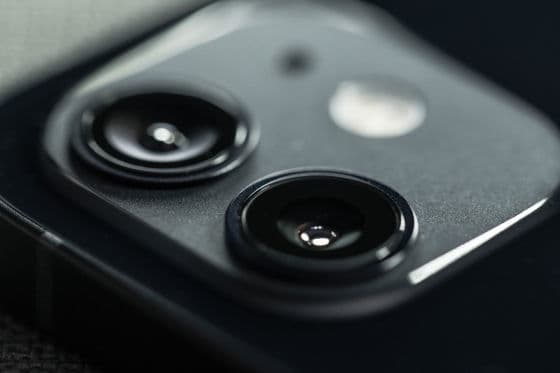
The iPhone 16 Pro marks a strategic shift in Apple’s imaging philosophy. While retaining the 1/1.28-inch, 48MP footprint of its predecessor, the new Sony IMX903 sensor introduces a more efficient 22nm manufacturing process. This technical leap, paired with the A18 Pro chip, unlocks professional-grade 4K 120fps Dolby Vision and eliminates shutter lag. It is a story of "speed over size," proving that in the world of computational photography, how fast a sensor talks to the processor is just as vital as how much light it captures.
With the launch of the iPhone 16 lineup, one of the hottest topics has been its camera upgrades—especially the main sensor inside the iPhone 16 Pro and Pro Max. After months of speculation, it’s now clear that Apple is once again partnering with Sony to deliver a custom sensor: the IMX903.
Last year’s iPhone 15 Pro Max and iPhone 14 Pro Max both used Sony’s IMX803. Going further back, the iPhone 6s jumped from 8MP to 12MP, and by the time we reached the iPhone 14 Pro, Apple had moved to a 48MP main camera. Alongside higher megapixels, Apple has steadily increased sensor size, keeping pace with the industry trend toward near-1-inch sensors.
The IMX903 in the iPhone 16 Pro maintains the same 1/1.28-inch size, 48MP resolution, and 1.22µm pixel pitch as last year. That’s smaller than the rumored 1/1.14-inch sensor with stacked transistor tech many fans were hoping for. So where’s the real upgrade?
According to Apple, the new 48MP “fusion” camera features a faster sensor and a new camera architecture that moves data more efficiently from the sensor to the A18 Pro chip. What that means in practice:
Support for 4K 120fps Dolby Vision video, with frame-by-frame cinematic-grade color grading.
Zero-shutter lag when shooting 48MP photos.
Lower power consumption, thanks to Sony’s 22nm process technology, the same used in its top-end LYT-900 one-inch sensor. (By comparison, the older IMX803 was built on 40nm.)
This shift to a smaller manufacturing process mirrors what we’ve seen in smartphone processors: more advanced lithography = better efficiency and performance.
Before launch, rumors claimed the IMX903 would cost nearly double that of Sony’s one-inch IMX989. That seems exaggerated. Apple is Sony’s biggest semiconductor customer, contributing to over half of its sensor revenue. With Apple’s purchasing power, it’s unlikely the cost difference is anywhere near that extreme.
Instead, those cost rumors may have been referring to the IMX907, a next-gen sensor rumored for the iPhone 17 Pro. Early reports suggest a 1/1.12-inch, 50MP sensor with quad-pixel autofocus, stacked transistor tech, and improved low-light performance—features that would justify a much higher cost.
Since the iPhone 11, Apple has leaned heavily into computational photography, combining sensor data with neural engine algorithms to deliver sharper detail, better dynamic range, and smarter image processing. The sensor is the foundation, but the magic comes from the synergy between hardware and software.
The IMX903 may not bring a dramatic size increase, but its faster architecture unlocks the potential for Apple’s imaging pipeline to do more—especially in video. The real leap, however, may come when Apple adopts the next-generation stacked sensors in future models.
The iPhone 16 Pro’s camera upgrades may feel incremental, but they highlight a key truth in smartphone imaging: it’s no longer just about megapixels or sensor size, but also efficiency, processing speed, and computational power. As Apple continues to refine its hardware-software balance, the next breakthrough in mobile photography could be closer than we think.
AMKOV manufactures OEM/ODM cameras — request our sensor spec sheet.

11/10/2026
19/09/2026
05/09/2026
23/08/2026
10/08/2026
18/07/2026

01/07/2026
20/06/2026

06/06/2026

14/05/2026