OEM Manufacturing • ODM Development • Bulk Supply — Serving 50+ Countries Worldwide

OEM Manufacturing • ODM Development • Bulk Supply — Serving 50+ Countries Worldwide
Admin
20/06/2026
1
For global distributors, camera retailers, and brands sourcing OEM/ODM camera solutions, understanding the difference between optical zoom vs digital zoom is essential to making informed product decisions. This distinction directly impacts image quality, customer satisfaction, and how a product is positioned in the market. Amkov cameras combine both technologies across their lineup, and knowing how each works helps buyers choose the right model for their target audience — whether that's education, outdoor equipment, travel, or content creation markets. In this article, we break down what optical zoom and digital zoom actually mean, how Amkov implements them, and why this matters for B2B buyers building or expanding a camera product line.
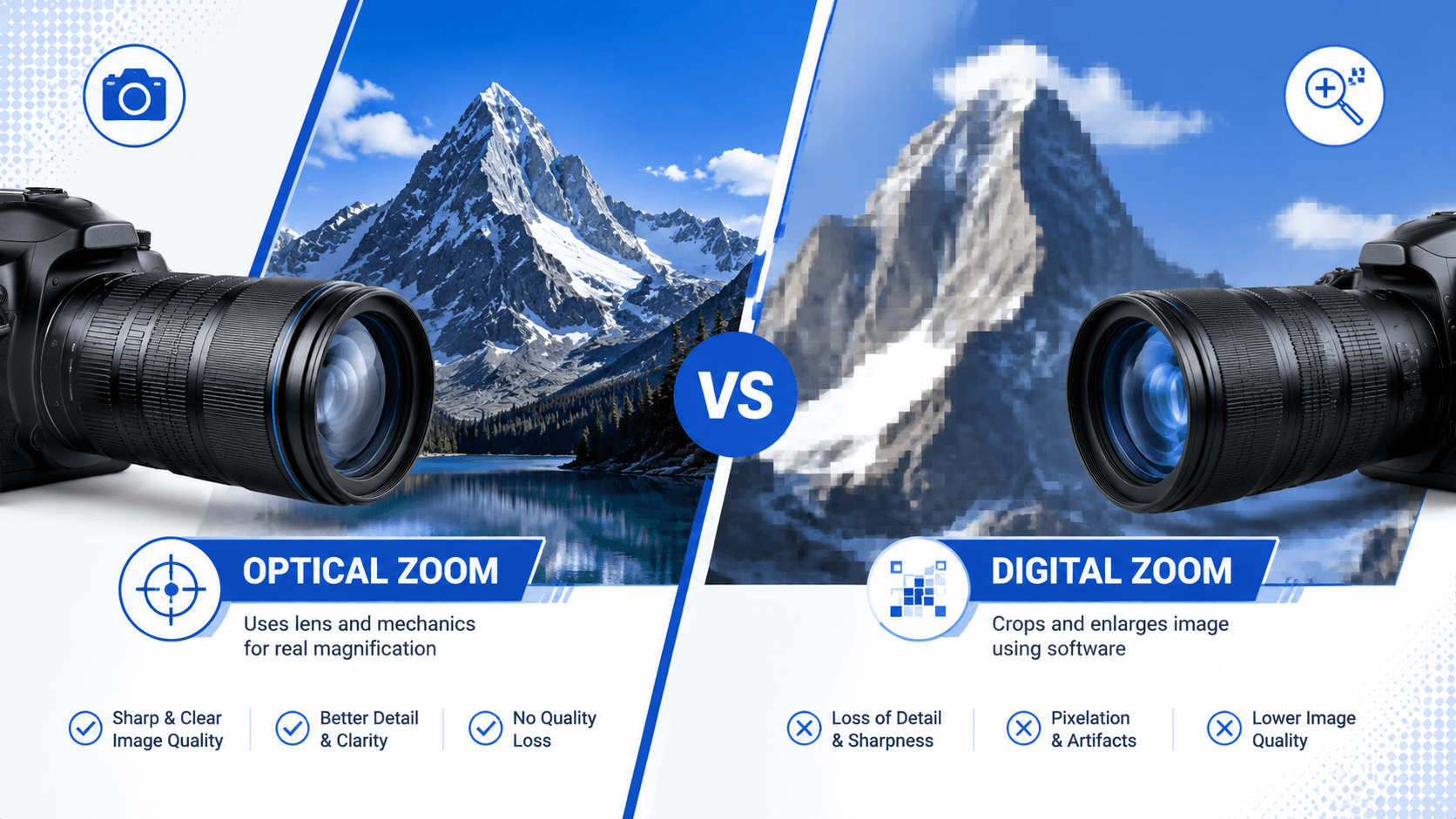
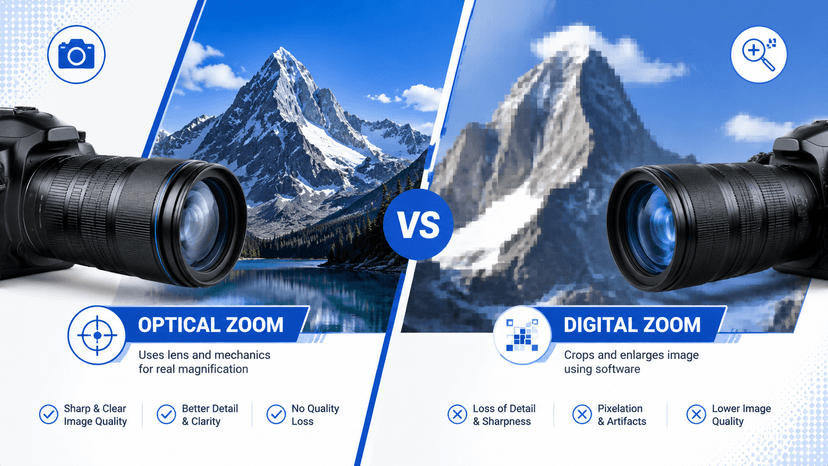
Optical zoom is a lens-based technology where physical lens elements move within the camera to bring distant subjects closer. Because the sensor captures genuine optical light data, image quality remains sharp and detailed regardless of zoom level.
Optical Zoom in Amkov Cameras
Several Amkov models feature high-powered optical zoom lenses designed to deliver clear, professional-grade images without quality degradation. This is a major selling point for outdoor equipment brands, travel brands, and education product buyers, since end users can capture distant scenes or subjects without sacrificing clarity.
Digital zoom is a software-based process. Instead of physically magnifying the image, the camera crops a portion of the frame and enlarges it digitally. Since no additional optical data is captured, this typically results in reduced resolution and softer image detail at higher zoom levels.
Digital zoom works best as a supplementary feature in budget-friendly product lines or for casual, entry-level users. For content creation brands or everyday photography use cases, it offers a quick way to adjust framing — but it isn't a substitute for optical zoom when professional-grade image quality is required.
Optical Zoom vs Digital Zoom: Key Differences
Optical zoom and digital zoom differ mainly in how they process and capture images. Optical zoom uses physical lens movement, meaning the camera lens physically adjusts to bring the subject closer without losing detail. This results in preserved image quality, making it ideal for professional and semi-professional use where clarity is important. However, because it relies on mechanical components, optical zoom systems are generally higher in cost.
Digital zoom, on the other hand, works through software cropping. Instead of physically adjusting the lens, it enlarges a portion of the existing image, which often leads to reduced image quality. Despite this limitation, digital zoom is more affordable and widely used in entry-level or casual photography devices. It is best suited for users who need basic zoom functionality without requiring professional-grade detail or clarity.
For Retailers and E-commerce Sellers
Inaccurate or vague zoom specifications in product listings can lead to customer returns and negative reviews. Clearly communicating Amkov's zoom lens camera capabilities — distinguishing optical from digital zoom — helps set accurate customer expectations and reduces post-sale issues.
For OEM/ODM Partners
When developing custom camera solutions, the quality of the optical zoom module largely determines the final product's market positioning — whether it competes in the premium or budget segment. This makes optical zoom specification a key decision point during sourcing.
For Education and Outdoor Brands
For use cases like wildlife observation, field trips, or study-related applications, a strong optical zoom system significantly improves the end-user experience, since these scenarios often require capturing distant subjects with clarity.
Amkov's Advantage: Hybrid Zoom Technology
Many Amkov models combine optical and digital zoom, giving users extended reach while preserving core image quality through the optical zoom component. This hybrid approach allows brands to offer extra functionality without compromising on the image quality that optical zoom delivers — a practical, value-for-money positioning for diverse markets.
Optical zoom is always better for image quality, since it captures real optical data without resolution loss. Digital zoom is best suited for budget-conscious or casual-use scenarios where extreme image sharpness isn't the priority.
Optical zoom capability varies by model and target user segment. Buyers should check Amkov's product catalog or contact the sales team for specific zoom specifications relevant to their intended market.
Because optical zoom directly affects product positioning, customer satisfaction, and return rates. Strong optical zoom performance supports premium branding and long-term reputation in competitive markets.
Conclusion
Understanding the difference between optical zoom and digital zoom is essential for any business operating in the camera distribution, retail, or OEM/ODM space. Amkov's advanced optical zoom technology — combined with practical hybrid zoom options — gives brands a competitive edge across multiple market segments.
If you're looking for a reliable, scalable camera supply partner, get in touch with Amkov today to explore product options and find the right zoom solution for your business needs.
11/10/2026
19/09/2026
05/09/2026
23/08/2026
10/08/2026
18/07/2026
01/07/2026
20/06/2026
06/06/2026
14/05/2026