OEM Manufacturing • ODM Development • Bulk Supply — Serving 50+ Countries Worldwide

OEM Manufacturing • ODM Development • Bulk Supply — Serving 50+ Countries Worldwide
Admin
25/11/2026
5
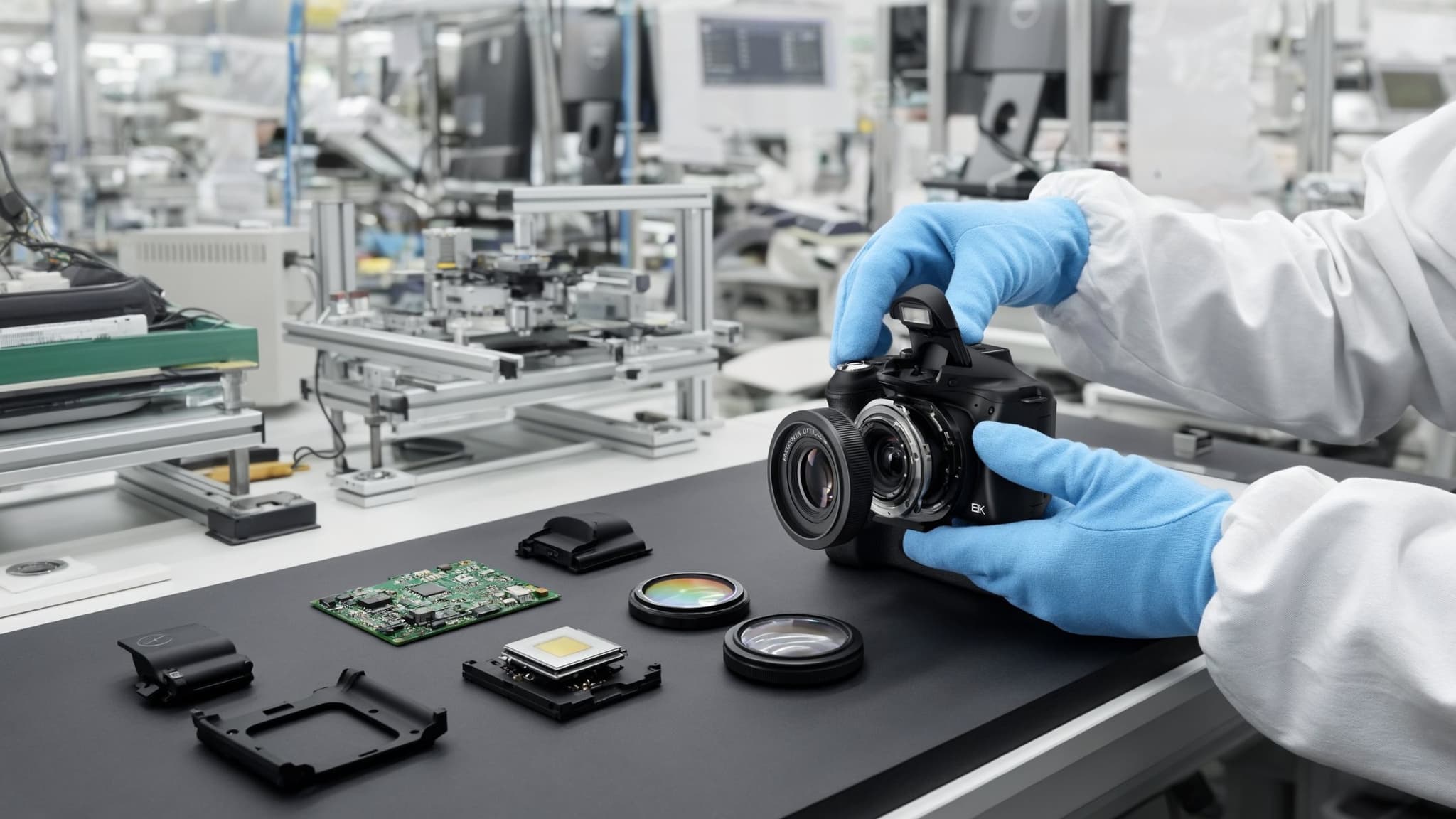
Every photograph begins with light, but capturing that light requires an intricate combination of optical engineering, electronic components, precision manufacturing, and software. Behind every compact digital camera is a carefully coordinated production process that transforms individual parts into a complete imaging device.
In 2026, digital camera manufacturing continues to evolve through improved CMOS image sensors, compact electronics, automated assembly equipment, and sophisticated image processing systems. From lens alignment to final quality inspection, each stage influences the camera's performance, reliability, and user experience.
Understanding how digital cameras are made is particularly valuable for camera brands, distributors, and businesses exploring OEM or ODM manufacturing. Companies such as AMKOV provide digital cameras and manufacturing solutions for global business customers.
This guide explains the essential camera components, manufacturing stages, assembly techniques, and quality control procedures involved in producing modern digital cameras.
A digital camera combines optical, mechanical, and electronic systems to capture, process, and store images. Although individual designs vary, most cameras share several essential components.
The camera lens gathers and focuses light onto the image sensor. Its optical design influences image sharpness, distortion, field of view, and focusing performance.
Different camera lens types serve different purposes. Wide-angle optics capture broader scenes, while zoom lenses provide adjustable focal lengths.
Manufacturers must carefully manage lens positioning, optical tolerances, and alignment during assembly.
For a practical example, explore AMKOV's optical zoom cameras, which illustrate how different lens configurations support imaging applications.
The image sensor converts incoming light into electrical signals that can be processed into digital images.
Modern cameras commonly use CMOS image sensor technology because it supports efficient electronic integration, fast readout, and flexible imaging functions.
CCD sensors remain important in the history of digital imaging, but CMOS technology dominates many contemporary consumer camera applications.
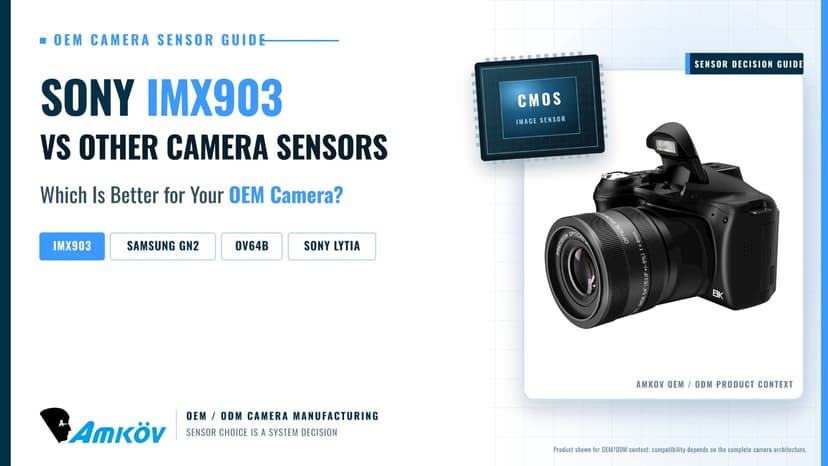
Sensor selection also affects manufacturing requirements. Learn how different sensor architectures compare in AMKOV's camera sensor comparison guide.
An image processor transforms sensor data into photographs or video. Depending on the camera architecture, processing operations can include noise reduction, color correction, white balance, sharpening, and image compression.
The processor also contributes to video recording, autofocus control, and overall camera responsiveness.
The printed circuit board connects the camera's electronic components and enables communication between its processing, sensing, storage, and control systems.
Circuit board components may include processors, memory chips, connectors, capacitors, resistors, and power-management devices.
The camera body protects internal electronics and provides the structure for buttons, displays, and other interfaces.
Additional components may include a camera shutter, aperture mechanism, LCD screen, flash, battery, microphone, speaker, and memory card slot, depending on the product design.
A typical digital camera manufacturing process involves several connected stages. The exact production sequence depends on camera design, factory capabilities, and whether specialized components arrive preassembled from suppliers.
Manufacturing begins with product development.
Engineers establish technical requirements such as image resolution, lens specifications, processor compatibility, video capabilities, battery performance, and camera dimensions.
Mechanical designers create the camera housing, while electronics engineers develop circuit layouts and component connections.
During this stage, manufacturers also evaluate production costs, component availability, reliability requirements, and assembly feasibility.
For OEM and ODM camera projects, product development may involve custom branding, exterior design, firmware features, and packaging specifications.
A well-defined design helps minimize compatibility issues and costly modifications during production.
The next stage involves manufacturing or sourcing the printed circuit boards that support camera operation.
PCB manufacturing creates conductive pathways on insulating board materials. Electronic components are then mounted onto the finished boards.
A widely used production method is surface mount technology (SMT), which allows small electronic components to be positioned and soldered with high precision.
The PCB assembly process generally includes solder paste application, automated component placement, reflow soldering, and inspection.
Depending on the design, additional connectors or through-hole components may require separate assembly operations.
Completed boards undergo electrical or functional checks to identify manufacturing defects before integration into the camera.
The image sensor is one of the most sensitive components in a digital camera.
Sensor chips are generally produced through specialized semiconductor fabrication processes before being packaged and supplied for electronic assembly.
During camera manufacturing, the sensor or preassembled sensor module is integrated with the appropriate circuit board and interface connections.
Careful handling is essential because dust, contamination, mechanical stress, and incorrect positioning can affect imaging performance.
Manufacturers must maintain appropriate environmental controls and follow component-handling procedures.
Once installed, the sensor is prepared for integration with the camera's optical system.
Lens assembly is a critical stage because even minor positioning errors can influence image quality.
A typical lens assembly contains multiple optical elements arranged inside a lens barrel. Each element contributes to focusing light accurately onto the sensor.
Depending on the design, manufacturers may use precision fixtures, mechanical adjustment, or active alignment technology.
Active alignment measures imaging performance while adjusting the position or orientation of the lens relative to the sensor.
The assembly is then secured once the required optical performance is achieved.
For zoom cameras, manufacturers must also integrate the relevant moving lens groups and mechanical or electronic control systems.
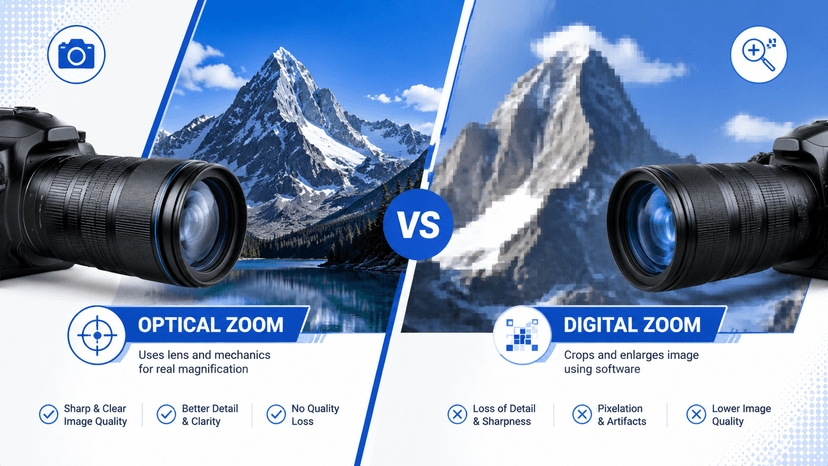
The technical differences between these systems are explained further in AMKOV's optical zoom vs digital zoom guide.
Accurate optical assembly helps maintain image sharpness and consistent focusing performance.
After preparing the main electronic and optical components, manufacturers assemble the complete camera body.
This stage typically includes installing the lens module, PCB, display, control buttons, battery contacts, and other supporting parts.
Internal cables and connectors link the components, while screws, brackets, and structural features secure them in position.
Assembly technicians or automated equipment must maintain consistent mechanical tolerances to prevent alignment problems or component damage.
For waterproof camera designs, the process may require additional seals, gaskets, and enclosure checks.
The completed mechanical structure must support reliable operation while remaining practical for everyday handling.
Physical assembly alone cannot make a digital camera fully functional.
Firmware provides the instructions that coordinate camera hardware, including the image sensor, processor, display, storage system, and user controls.
Manufacturers install the appropriate firmware and configure settings for the selected hardware platform.
Imaging adjustments may include color reproduction, exposure response, white balance, noise reduction, and lens-related corrections.
Features such as optical zoom, digital zoom, autofocus, and electronic image stabilization depend on compatible hardware, software, or both.
Firmware validation also helps identify communication errors, unexpected shutdowns, and other operating problems.
Before cameras are approved for shipment, manufacturers perform quality checks according to their product specifications.
Testing helps determine whether the assembled camera operates consistently and meets its defined performance requirements.
Technicians may capture standardized test charts and images to evaluate sharpness, focusing accuracy, exposure, color reproduction, and visible defects.
Camera sensor tests can also identify abnormal pixels, unwanted image artifacts, or inconsistencies.
Functional checks evaluate buttons, displays, charging circuits, memory card interfaces, audio recording, and communication functions.
Where applicable, manufacturers may verify flash operation, zoom movement, and video recording.
Depending on the product requirements, validation may involve operating-temperature evaluations, button-cycle testing, vibration testing, or battery performance checks.
Waterproof models require appropriate sealing verification and water-resistance testing under defined conditions.
Not every camera undergoes every possible test. The inspection plan depends on the model, applicable standards, and customer requirements.
The final manufacturing stage involves checking product appearance, completeness, and packaging accuracy.
Inspectors look for cosmetic defects, incorrect assembly, missing accessories, or other visible issues.
Approved products are cleaned, packaged, labeled, and prepared for distribution.
Packaging may include charging cables, batteries, user manuals, straps, and other accessories specified for the product.
For wholesale camera orders, packaging and labeling requirements may vary according to the customer's market and branding needs.
Businesses exploring different camera configurations can review AMKOV's digital camera product range to understand available product categories.
Digital camera production continues to benefit from advances in electronics manufacturing and precision engineering.
Automated optical alignment can improve consistency when positioning lenses and sensors. Advanced inspection equipment helps identify defects that may be difficult to detect through visual examination alone.
Improvements in CMOS image sensor technology support increasingly capable compact imaging devices, while modern processing systems enable more sophisticated image and video features.
Manufacturers are also paying greater attention to production traceability, component compatibility, and efficient quality management.
However, these technologies are not universal. Their adoption varies according to production scale, product specifications, and manufacturing investment.
For businesses planning to launch a camera brand, understanding the difference between OEM and ODM manufacturing is essential.
OEM camera manufacturing generally involves producing cameras according to an agreed design or set of customer specifications. This model can provide greater control over product requirements.
ODM camera manufacturing typically involves using a manufacturer's existing design or development platform, with agreed customization options.
ODM solutions can simplify certain development stages, while OEM projects may be preferable when a brand requires more extensive product differentiation.
The appropriate approach depends on target customers, development budgets, customization needs, order volumes, and launch schedules.
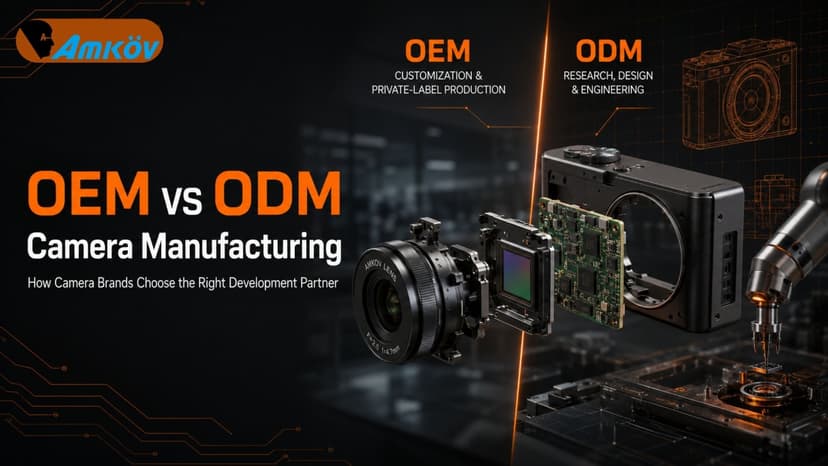
For a detailed comparison, read OEM vs ODM Camera Manufacturing: How Camera Brands Choose the Right Development Partner.
Assembly time varies according to camera complexity, production equipment, component availability, testing requirements, and factory workflow. A simple compact camera and a more complex optical zoom model may require different production arrangements.
There is no single component responsible for image quality. The lens, image sensor, image processor, and firmware work together, while manufacturing precision influences how consistently the complete system performs.
CMOS sensors offer advantages in electronic integration, power efficiency, and readout architecture. Their capabilities make them suitable for many modern consumer imaging applications.
Quality control helps identify optical, electronic, mechanical, and software-related defects before shipment. It also supports consistent manufacturing outcomes across production batches.
Digital camera manufacturing brings together optical engineering, semiconductor technology, electronics assembly, mechanical integration, and software development.
From the initial PCB design to lens calibration and final product inspection, each stage contributes to camera performance and reliability.
For brands and distributors, understanding these processes provides a stronger foundation for evaluating product specifications, manufacturing partners, and quality expectations.
AMKOV offers digital camera products and OEM/ODM solutions for businesses exploring private-label and wholesale opportunities.
Explore AMKOV's OEM and ODM camera manufacturing solutions or contact the AMKOV team to discuss product customization, sourcing requirements, and business cooperation opportunities.
AMKOV manufactures OEM/ODM cameras — request our sensor spec sheet.
25/11/2026
11/10/2026
19/09/2026
05/09/2026
23/08/2026
10/08/2026
18/07/2026
01/07/2026
20/06/2026
06/06/2026